About Quantum Leap
Across industries, the transition to digital data is accelerating, reshaping how information moves through global supply chains. Yet many parts of these supply chains still rely on paper-based system…

Across industries, the transition to digital data is accelerating, reshaping how information moves through global supply chains. Yet many parts of these supply chains still rely on paper-based systems that create data silos, slow information flow, and complicate traceability efforts. This reliance makes it difficult to verify compliance, conduct timely audits, or trace products quickly in the event of a recall.
While digital traceability solutions have evolved over the past decade, their uptake remains limited in parts of the supply chain due to persistent technical, financial, and operational barriers.
Through the Quantum Leap project, IFT’s Global Food Traceability Center is rethinking this approach and testing the limits of emerging technologies to help bridge these analog data collection processes with the ongoing digital transformation of food systems. Instead of replacing established processes, we are aiming to digitize what supply chains already produce – paper records, handwritten logs, PDFs, spreadsheets, emails, images, etc., with the aim of unlocking the billions of existing data points otherwise trapped in documents and transforming them into usable digital traceability data.
How Quantum Leap Works
Users simply upload supply chain documents into the application. Quantum Leap applies optical character recognition (OCR), language models, and machine learning to extract traceability data directly from the files.
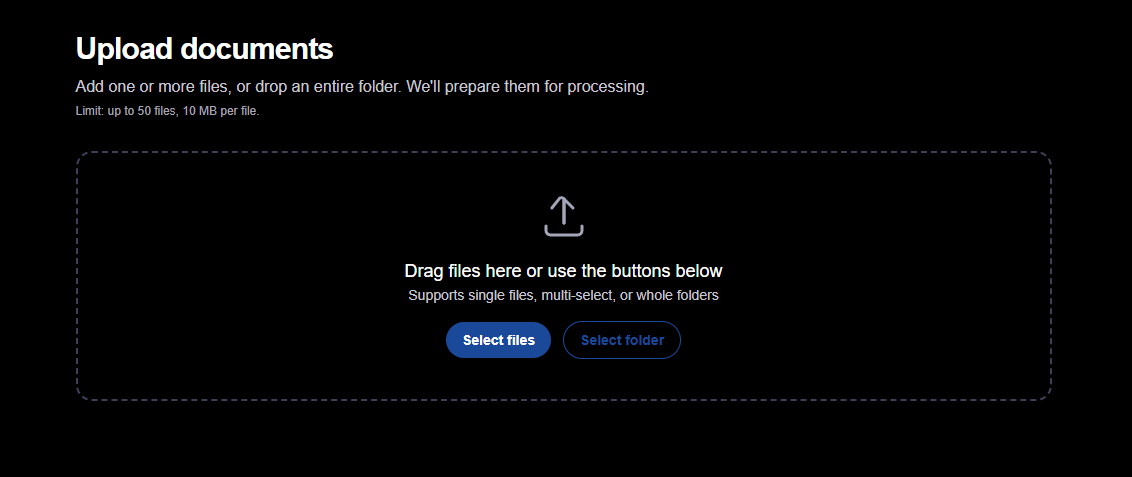
Figure 1. Document import screen
Quantum Leap continuously learns and improves through simple user prompts that help verify the output. This not only improves accuracy in real-time but also actively trains the model, progressively reducing the need for extensive user input over time.
Using advanced analytics and feedback from the user, the system starts by classifying the document type – whether an invoice, bill of lading, purchase order, or another format – to provide context for how to interpret the information.
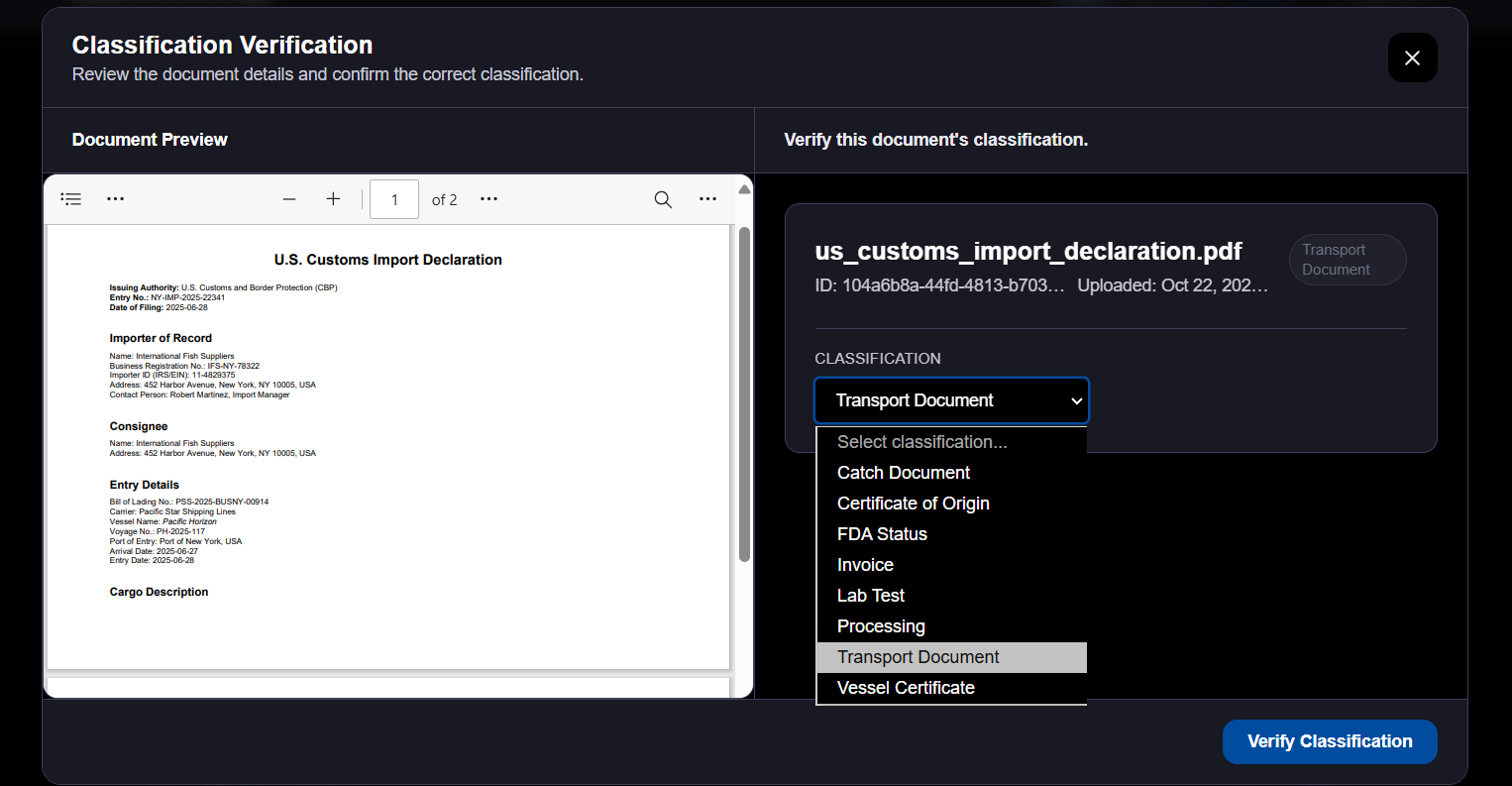
Figure 2. Document classification verification prompt
The application then links related information across documents, breaking down the documents into data points, and arranging the data to be consistent with industry or regulatory requirements. This process increases the accuracy of identifying and mapping data with each use.
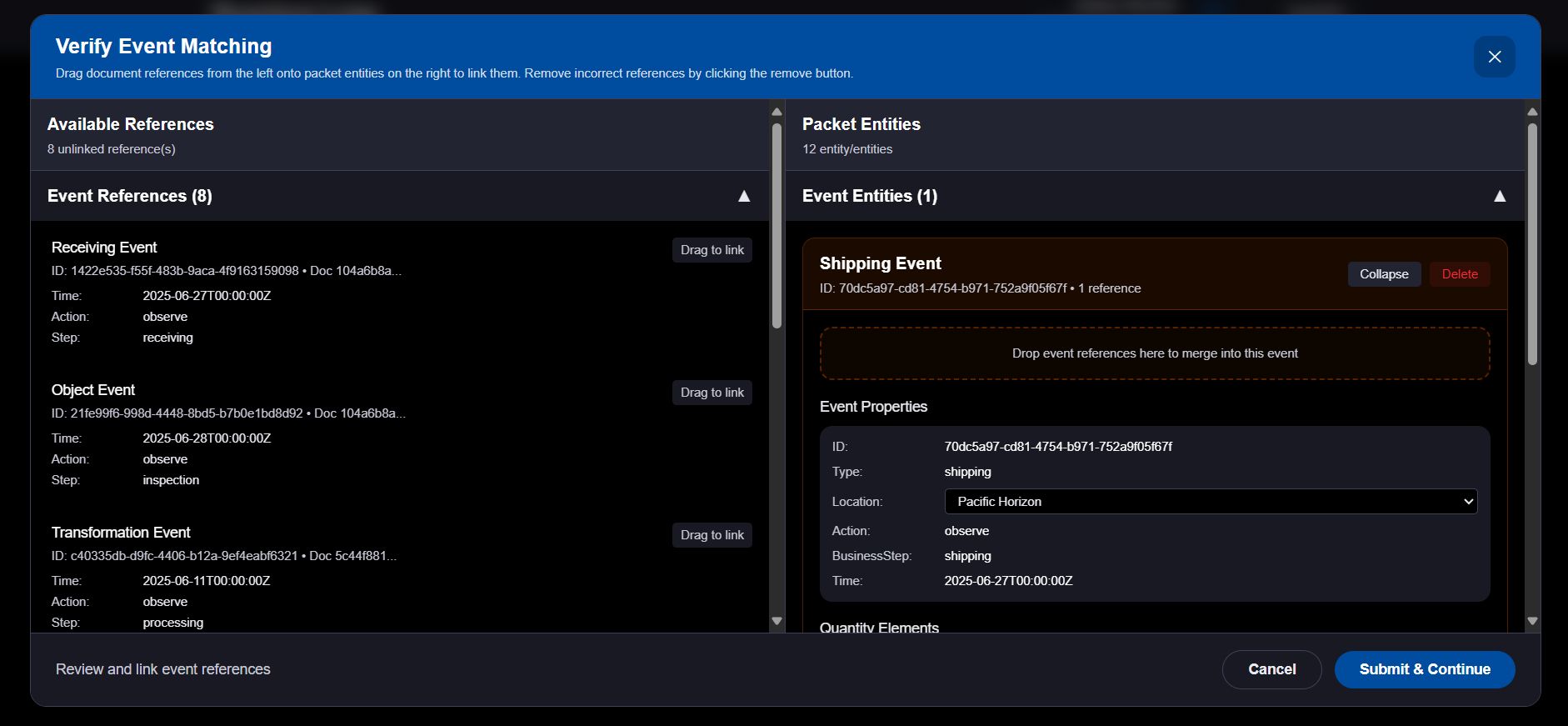
Figure 3. Event reference link validation
Once document references have been verified, it organizes Key Data Elements (KDEs) such as dates, products, quantities, and entity identifiers, and maps them into a graph view of standardized Critical Tracking Events (CTEs).
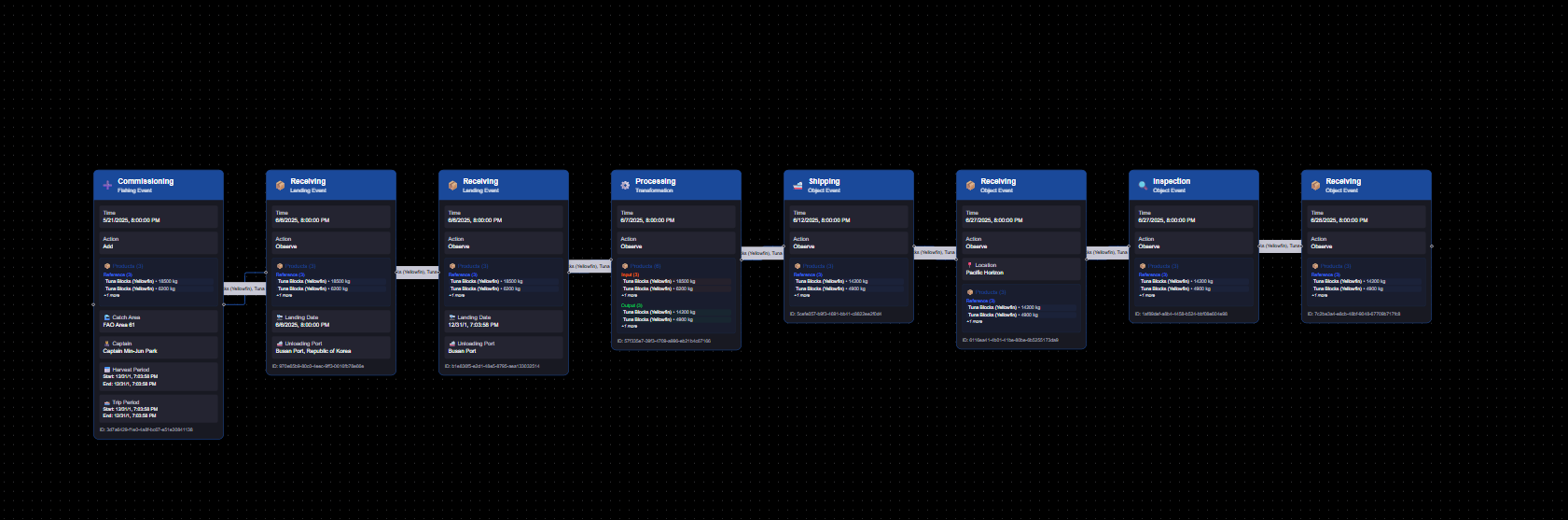
Figure 4. Graph view of CTEs
The result is an event-centric representation of the traceability data extracted from the documents. Users can download a digital output (delivered in CSV or JSON formats) ready for integration into compliance reporting, risk management, transparency initiatives, or corporate social responsibility systems.
Who Benefits from Quantum Leap
Quantum Leap was designed for the broad range of organizations that need accurate, timely, and standardized supply chain data.
Here are several use cases that we aim to explore through beta testing:
- Supply chain actors can use Quantum Leap to digitize paper records, gain insights into daily operations, strengthen recall readiness, and easily share data with supply chain partners and regulators. Many businesses receive key supply chain data on paper—like invoices, harvest logs, or shipment records—that must be manually entered into digital systems. This process is time-consuming, error-prone, and creates bottlenecks when sharing data with partners using digital traceability systems. Quantum Leap aims to support the automation and simplification of the conversion of analog records into standardized digital data.
- Solution provider users can easily upload their paper records containing traceability data, and transfer Quantum Leap’s output file containing clean, standardized data directly into their traceability platforms.
- Auditors can upload paper-based verification documents submitted by supply chain actors. Quantum Leap can convert these records into structured, standardized traceability data, ready for direct upload into compliance platforms. By reducing manual interpretation, Quantum Leap brings greater objectivity to the auditing process and builds confidence in those being audited that their documentation accurately adheres to compliance requirements.
How did we do?
FAQs for the Seafood Sector